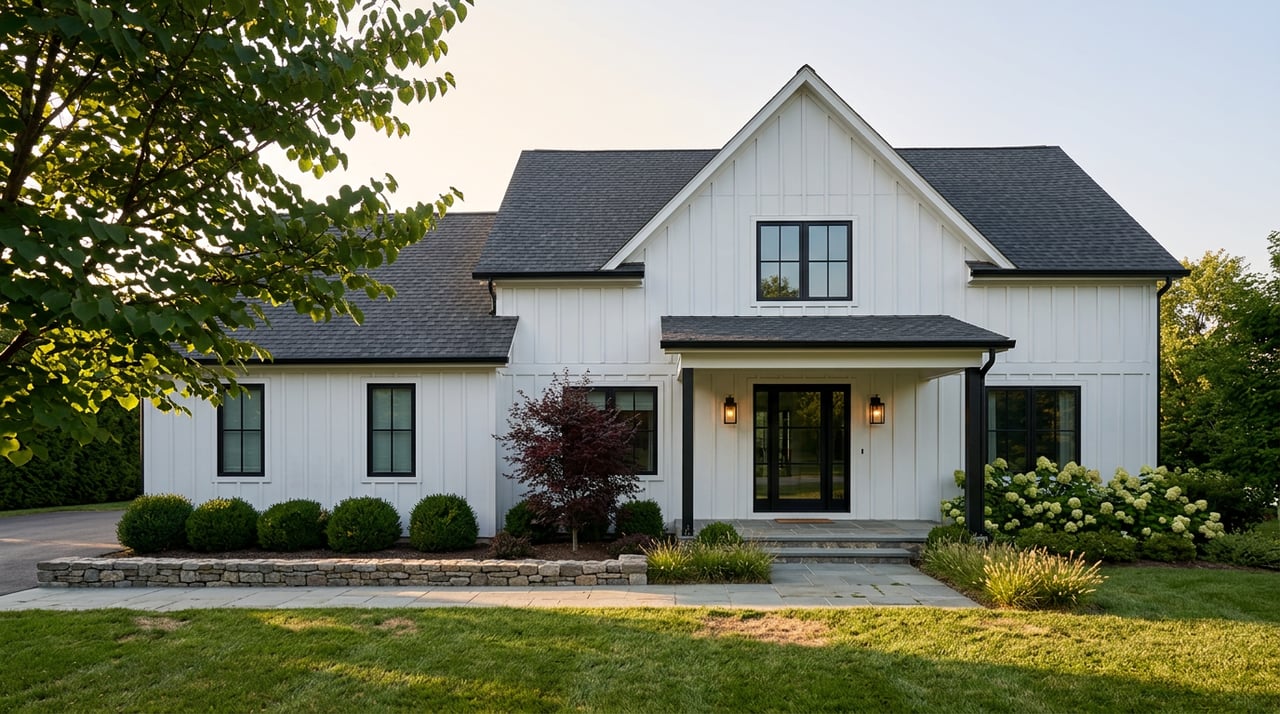
The 7:42 out of Dover pulls into Denville eleven minutes later. Same train, same conductor, same electric locomotive that will carry both sets of passengers straight into New York Penn Station without a transfer at Hoboken. If you're shopping for a house in Morris County and you've been told that Midtown Direct access is the thing that sets the price floor, these two stations should cost roughly the same to live near.
They don't come close. In Denville, homes sold for a median price of $796,503 in May 2026. One stop west, in Dover, the median sale that spring was $410,000. Same tracks. Same one-seat ride to Manhattan. A little over half the price.
That gap is the reason to stop shopping Morris County by the phrase "Midtown Direct" as if it were a single price tier. It isn't. It's a label that applies to towns with wildly different housing markets, and the label alone tells you almost nothing about what you'll pay.
What Midtown Direct Actually Promises
The Kearny Connection opened in 1996, letting NJ Transit trains on the Morris and Essex corridor run straight into Penn Station instead of terminating at Hoboken for a PATH transfer. NJ Transit branded the service Midtown Direct, and the name stuck to the whole line: Chatham, Madison, Convent Station, Morristown, Morris Plains, Denville, and Dover all sit on the same electrified stretch and all get trains that make that same run.
What the name does not promise is a fixed number of those trains at every stop, or a fixed price at the end of the line. NJ Transit's own line description notes that a majority of scheduled trips on the Morristown Line use the Kearny Connection, while the rest still run to Hoboken. The split isn't even across every station, and Dover carries the added distinction of being the last stop before the electric catenary ends. Trains that go no farther west than Dover start and stop there. Everything past it runs on diesel toward Hackettstown.
None of that makes Dover less "direct." It's still inside the electrified zone. It's still a Midtown Direct town by the technical definition everyone uses. And it still sold for far less than Denville, one stop away.
The Corridor's Price Ladder
Line the stations up east to west and the prices don't fall the way distance from Manhattan would predict.
| Station | Recent median home price | Period |
|---|---|---|
| Chatham | roughly $1.0M–$1.2M | 2026 |
| Madison | $1,249,500 median list / $1,350,900 median sold | April 2026 |
| Morristown | $810,000 median sale | 3 months ending May 2026 |
| Denville | $796,503 median sale | May 2026 |
| Dover | $410,000 median sale | March 2026 |
Madison, which is farther from Manhattan than Chatham, still outprices it in some readings and trails it in others depending on the month, which tells you commute minutes aren't running this show either. Morristown and Denville land within about $15,000 of each other despite Denville sitting two stops farther out. Then Dover falls off a cliff that distance alone can't explain, since it's only one stop past a town selling for nearly double.
One honest caveat on that Dover number: it comes from a sample of just four closed sales that month, small enough that a single high-end or low-end deal could swing the median hard. Zillow's home value index, which smooths for exactly that kind of noise, still put Dover's average home value at $522,244 as of June 2026, up only 1.1 percent year over year. That's a gentler number than $410,000, but it's still a fraction of what Denville and Morristown are commanding on the same line.
Same Line, Half the House
Here's where the price-per-square-foot numbers do something the median alone can't. Denville's per-square-foot price ran $324 as of August 2026. Dover's ran $305 in March 2026, only about 6 percent lower. If the land itself, or the train access, were driving the gap, you'd expect the per-square-foot numbers to diverge as sharply as the medians do. They don't.
What that tells you is that the price gap is mostly a size and inventory story, not a location discount. Run the math backward and a typical Denville sale at those figures works out to roughly 2,600 square feet. A typical Dover sale works out to roughly 1,340 square feet. Dover isn't a cut-rate version of Denville's housing. It's a different housing stock entirely, smaller and older on average, sitting on the same rail line as a town selling much larger houses at nearly double the price per closing.
That distinction matters if you're comparing these towns on a spreadsheet. A buyer who sees "Dover: $410K, Midtown Direct" next to "Denville: $796K, Midtown Direct" and assumes they're looking at the same product with a $386,000 discount is about to be surprised by square footage, lot size, and layout the moment showings start.
What Actually Explains The Gap
Three things are doing more work than the train schedule.
Downtown investment. Denville's Broadway corridor runs an Irish pub, a brewery, a fish market, and an ice cream counter in about three walkable blocks, all within a short walk of the station and the municipal lot, according to the Downtown Denville Business Improvement District. Diamond Spring Brewing Company occupies a converted 1960s service station with a beer garden on Broadway. Thatcher McGhee's and Denville Seafood anchor the same stretch. That kind of walkable, invested Main Street doesn't show up as a line item on a listing sheet, but it shows up in what buyers are willing to pay to live near it.
Housing stock mix. As the square-footage math above shows, Denville's inventory skews toward larger single-family homes, including lake-adjacent properties around Indian Lake and Cedar Lake. Dover's inventory skews smaller. That's not a commentary on either town's desirability. It's a fact about what's actually for sale, and it explains most of the price gap that a simple "which towns have Midtown Direct" checklist would miss entirely.
Schedule specifics at the individual station. Because Dover sits at the edge of electrified territory, some trains start and end their run there rather than continuing east, and the practical mix of direct-to-Penn-Station departures a Dover commuter sees on a given morning is worth checking against the actual weekday timetable rather than assuming it matches Denville's.
What This Means If You're Comparing Morris County Towns
Don't shop the Midtown Direct label as a single filter. Shop the specific station.
Before you set a budget around "anything on Midtown Direct," pull the weekday schedule for the exact station you're considering and count how many trains actually run through to Penn Station without a change, rather than assuming every stop on the line offers the same frequency. Then compare price per square foot, not just the headline median, across the towns you're weighing. A $400,000 gap between two adjacent stations might reflect two very different housing products rather than one town being a bargain and the other overpriced.
And treat any single month's median with some skepticism if the sales count behind it is small. Four closings can produce a headline number that a dozen closings would smooth out considerably.
Frequently Asked Questions
Is Dover really a Midtown Direct town, or is that a stretch? It is. Dover sits within the electrified segment of the Morristown Line, and Midtown Direct trains do originate and terminate there. The technical access is real. What differs is the mix of direct-to-Penn departures, as well as the housing stock and downtown investment around that access.
If train access doesn't explain the price gap, why do people pay more in Madison and Chatham than in Morristown or Denville, which are also on the line? Downtown character and housing stock size explain most of it, the same forces at work between Denville and Dover, just running in the other direction. Larger, newer, or more updated homes in walkable downtowns command more, regardless of which stop on the line they sit closest to.
Should I rule out a town just because its median price looks low? Not without checking what's actually driving that number. A lower median can mean a genuine value opportunity, or it can mean the available inventory in that price range is smaller and different from what you're picturing. Pull the price-per-square-foot figure and look at recent listings before you decide either way.
If you're weighing towns along this corridor, or anywhere else in northern or central New Jersey, and want someone to walk through what a specific station's price tag actually buys before you commit to a search radius, BQUEST Realty can help you compare the real numbers, not just the transit map. Request your free home valuation and let's talk through what fits your commute and your budget.