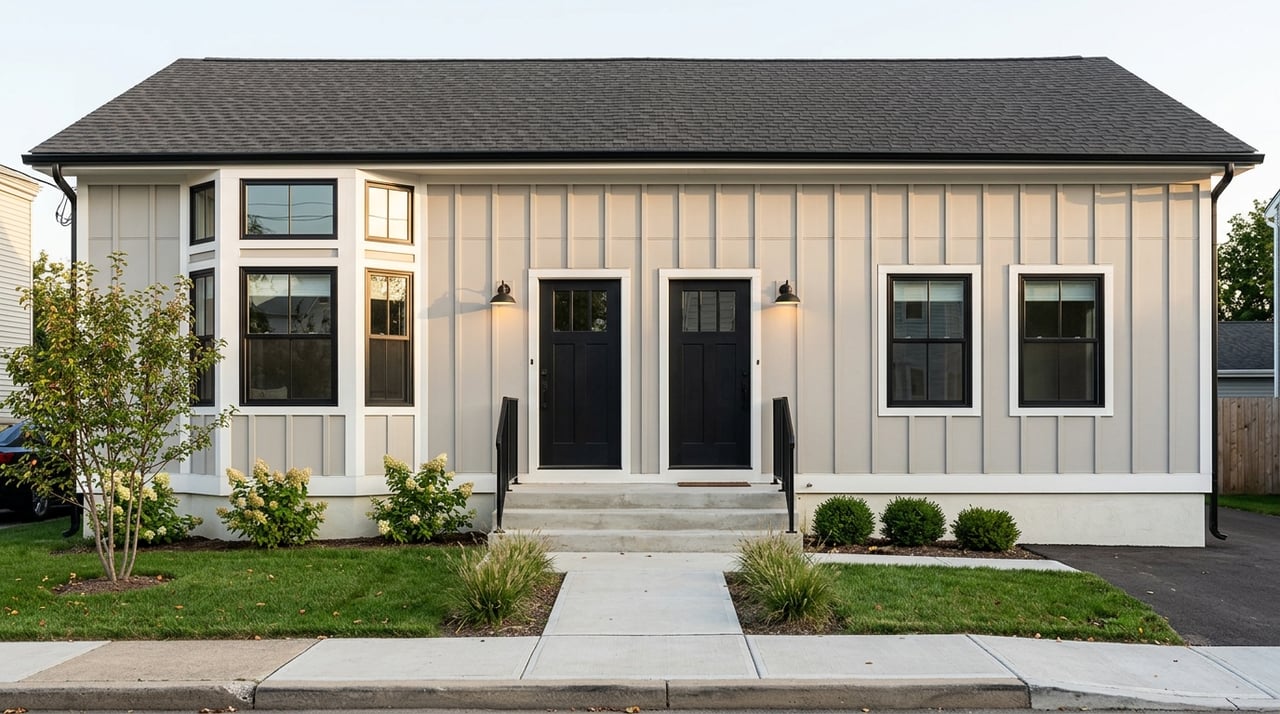
Thinking about buying a multi-family property in Passaic County so your tenants help cover the mortgage? It is a smart strategy, but only if you go in with clear numbers, realistic repair expectations, and a solid understanding of local rules. If you want to know where the opportunity is, what risks to watch, and how to evaluate a 2- to 4-unit property in this market, you are in the right place. Let’s dive in.
Why Passaic County fits house hacking
House hacking usually means buying a two-, three-, or four-unit property, living in one unit, and collecting rent from the others to offset your housing costs. In Passaic County, that strategy lines up well with the local housing stock because small multi-family buildings make up a large share of rental housing.
According to Rutgers’ 2024 Passaic County housing profile, 50% of rental units are in two- to four-unit buildings. Another 19% are in buildings with 5 to 19 units. That matters because it means the county already has the kind of property mix many house hackers are looking for.
Renter demand is also a big part of the story. Rutgers reports that the share of households that rent in Passaic County rose from 44% in 2000 to 49% in 2020, supported in part by regional commuting patterns to New York City and surrounding job centers. In the City of Passaic, renter occupancy is even more pronounced, with 76.8% of occupied housing units renter-occupied in 2020.
What prices and rents look like
Before you start touring duplexes and triplexes, it helps to understand the current pricing backdrop. Zillow reports typical home values in Passaic County at $598,901, with a median sale price of $565,000 as of May 31, 2026. Homes were going pending in about 17 days, which points to a market that is still competitive.
For small multi-family inventory, the county currently shows a broad pricing range. Zillow’s duplex and triplex listings include examples from about $389,999 in Paterson to $899,000 in Clifton, with many listings falling roughly between $549,000 and $799,000. That is not a formal median, but it gives you a practical range for early budgeting.
On the rent side, there are a few useful benchmarks. Zillow shows an average rent of $2,277 countywide, while New Jersey’s FY2026 Fair Market Rent documentation lists Passaic County area benchmarks at $2,024 for a one-bedroom, $2,324 for a two-bedroom, $2,835 for a three-bedroom, and $3,618 for a four-bedroom. Rutgers also reports a median gross rent of $1,484 using 2022 ACS data, which reflects a different type of data set and should not be treated as interchangeable with live asking rents.
Why cash flow is only part of the picture
A lot of first-time house hackers focus on one question: will the rent cover the payment? That question matters, but it is only the starting point. In Passaic County, the bigger win often comes from lowering your own monthly housing cost while building equity in a property with long-term upside.
You also need to remember that renter affordability is under pressure. Rutgers reports that the median renter household income in Passaic County is $50,493, more than half of renter households are rent burdened, and 29% are severely rent burdened. That means you should underwrite conservatively and avoid assuming easy rent jumps or perfect occupancy.
Financing basics for owner-occupied multi-family
One reason house hacking attracts so much attention is that owner-occupied financing can be more accessible than many buyers expect. HUD says FHA loans are available for 1- to 4-unit properties and may require as little as 3.5% down for qualified buyers.
There is also an income-qualification angle that can help. The CFPB says rental income from a property where you live in one or more units and rent the others may be used for qualifying purposes. In plain terms, future rent may help support your loan application, though your lender will still review the details closely.
If you are looking at a three- or four-unit property, be aware of extra underwriting standards. HUD requires a self-sufficiency test for those property types, so not every building that looks good on paper will meet financing guidelines. That makes early lender conversations especially important.
For eligible New Jersey buyers, NJHMFA says first-time homebuyer mortgage programs may be paired with down payment assistance, with assistance reaching up to $22,000. If you are trying to make the numbers work on your first purchase, that can be worth exploring with a participating lender.
Older properties create opportunity and risk
Passaic County’s small multi-family stock can offer strong value-add potential, but much of it is older. Rutgers reports that 35% of rental units were built before 1939 and 58% before 1960. That age profile can mean charm and layout flexibility, but it can also mean bigger maintenance and compliance costs.
In practical terms, older buildings often need more than cosmetic updates. You may be dealing with aging roofs, older electrical systems, plumbing issues, heating equipment, or unit layouts that need careful review before you count on rental income. The opportunity is real, but the renovation plan needs to be grounded in facts.
Rutgers also notes that older units may have lead-paint, lead-pipe, or asbestos hazards. That is why a smart house hacker in Passaic County looks closely at deferred maintenance, mechanical systems, and legal compliance instead of focusing only on kitchen finishes and fresh paint.
Lead rules and local compliance matter
If you are buying a pre-1978 rental property, New Jersey’s lead law adds a major layer of due diligence. The New Jersey Department of Community Affairs says certain single-family, two-family, and multiple-rental dwellings must be inspected for lead-based paint hazards every three years or upon tenant turnover if there is no valid lead-safe certification.
The state also says owners must provide lead-safe certifications during a real estate transaction, settlement, or closing. For a house hacker, this means lead compliance is not something to sort out later. It should be part of your review before you finalize your numbers and move forward.
Local permitting is just as important. The City of Passaic’s code enforcement resources include certificate-of-occupancy and certificate-of-tenancy applications, zoning permits, renovation checklists, and short-term rental certificates. Even if a listing is marketed as a duplex or triplex, you should verify legal unit count, permitted use, and inspection history before underwriting it that way.
Rent control can change your math
Not every town in Passaic County works the same way when it comes to rent increases. Rutgers reports that six of the county’s 16 municipalities have rent control ordinances, with caps ranging from 2% to 5% or tied to CPI.
Its table shows Passaic and Paterson covering buildings with 2 or more units. Clifton, Little Falls, and Wayne apply rent control to 4 or more units, while Woodland Park covers 1 or more unit buildings. Other municipalities do not have rent control ordinances, so you need to underwrite based on the specific town, not countywide assumptions.
This is a big deal for house hacking because many buyers count on future rent growth to improve cash flow. If the property is in a rent-controlled municipality, your future rent strategy may be more limited than you expect.
How to evaluate a Passaic County house hack
If you want a property that works in real life, look beyond the listing photos. A good deal is usually a mix of purchase price, repair scope, legal status, financing fit, and realistic rent potential.
Here are a few practical checkpoints to use:
Check the unit count
Make sure the property is legally recognized for the number of units being advertised. A building marketed as a three-family may not always match local records, zoning, or certificate history.
Study rents carefully
Compare the current rents and unit sizes to county rent benchmarks. Use market rent as a guide, but be careful not to assume top-of-market numbers without strong support.
Inspect for deferred maintenance
Older small multi-family homes can hide expensive issues. Pay close attention to roofing, foundation movement, heating systems, electrical panels, plumbing, and windows.
Budget for compliance
Lead inspections, certificates, permits, and turnover work can affect your cost basis. These items are not side notes. They are part of the real investment.
Stress-test your payment
Run the numbers with conservative rents and realistic repair reserves. If the deal only works under perfect conditions, it may not be the right first house hack.
Where BQUEST Realty adds value
House hacking in Passaic County is rarely just about finding a property online and making an offer. Many of the best opportunities involve older buildings, renovation questions, legal coordination, or properties that need a sharper eye on value-add potential.
That is where BQUEST Realty’s hands-on approach matters. With experience in multi-family and investor-grade assets, renovation guidance, vendor coordination, and complex transactions, our team helps you look past surface-level marketing and focus on what the property can realistically do for you.
If you are comparing a move-in-ready duplex with a rougher value-add building, or trying to understand whether a property’s layout, rent potential, and repair needs truly fit a house-hack strategy, clear local guidance can save you time and expensive mistakes.
If you are ready to explore multi-family opportunities in Passaic County, connect with BQUEST Realty for practical guidance tailored to your goals.
FAQs
What is house hacking in Passaic County?
- House hacking in Passaic County usually means buying a 2- to 4-unit property, living in one unit, and renting the others to help offset your monthly housing costs.
Can you use FHA for a multi-family property in Passaic County?
- Yes. HUD says FHA loans can be used for 1- to 4-unit properties and may require as little as 3.5% down for qualified buyers, though three- and four-unit properties have additional standards.
Can rental income help you qualify for a Passaic County house hack?
- Yes. The CFPB says rental income from a property where you live in one or more units and rent the others may be used for qualifying purposes, subject to lender review.
Are older multi-family homes common in Passaic County?
- Yes. Rutgers reports that 35% of rental units were built before 1939 and 58% before 1960, so many properties need careful review for repairs and compliance.
Does rent control affect house hacking in Passaic County?
- It can. Rutgers says six Passaic County municipalities have rent control ordinances, so your rent-growth assumptions should be based on the specific municipality where the property is located.
What should you verify before buying a multi-family property in Passaic County?
- You should verify legal unit count, permitted use, current rents, repair needs, lead-safe requirements, and local certificate or inspection history before making your decision.