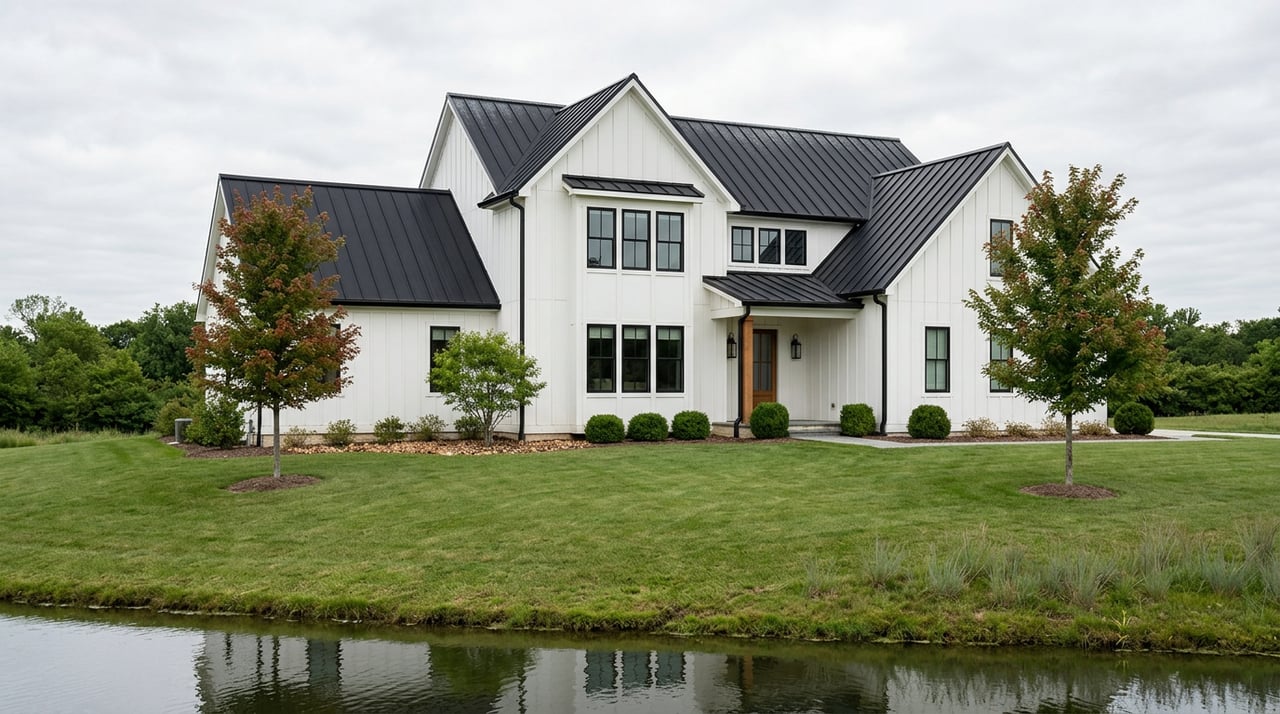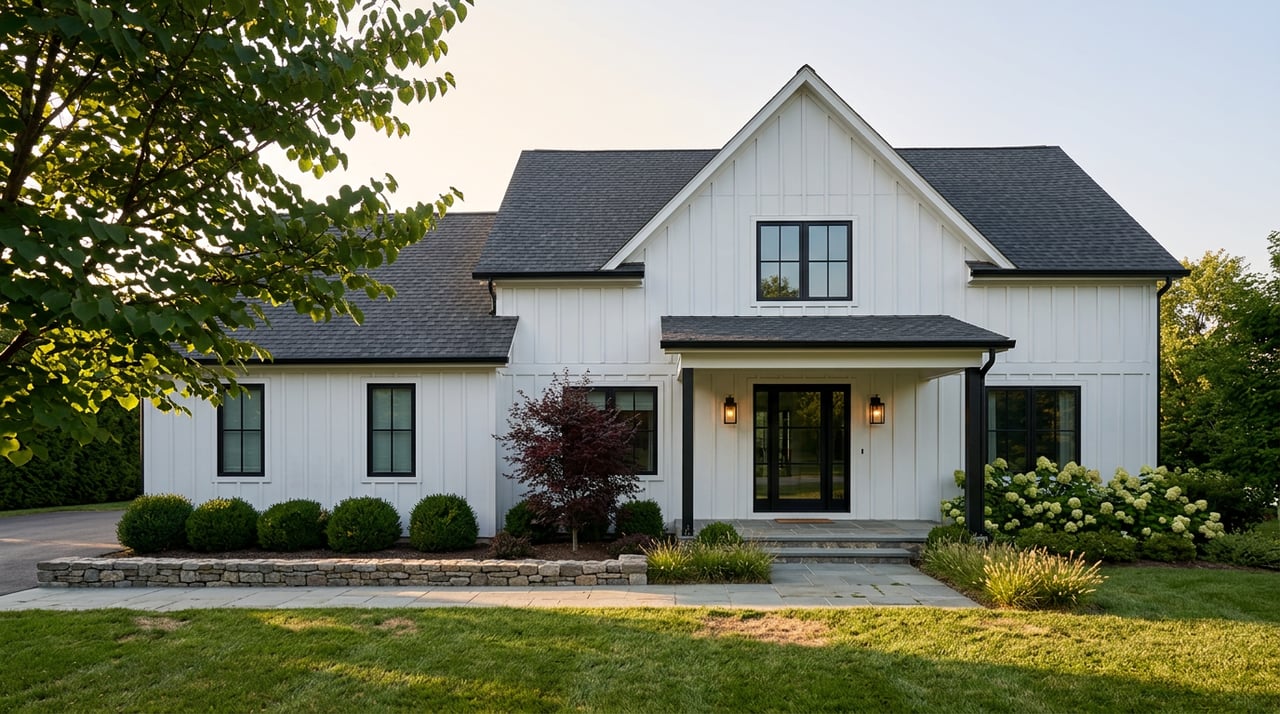
Spring Lake carries the lowest general property tax rate on the Jersey Shore. Its 2025 certified rate, set by the Monmouth County Board of Taxation, comes in at $0.457 per $100 of assessed value, an effective rate under half a percent. Homeowners forty minutes inland in Holmdel pay a certified rate more than three times higher, 1.539 per $100 of assessed value, an effective rate around 1.53 percent.
Run the actual dollar bills and the ranking flips. Spring Lake's townwide average annual property tax bill lands around $15,257. Holmdel's median annual bill sits at $13,681, according to Ownwell's property tax data. The town with the lowest rate in the comparison writes the bigger check.
This isn't a rounding error or a fluke of one bad year. It's what happens when two different numbers, rate and price, get compressed into a single marketing line. A buyer scanning listings and seeing "0.44% effective rate" next to a Spring Lake beach block home reads that as cheap. It measures something real: this town's rate really is lower. It does not measure what the buyer actually wants to know, which is what the check looks like every August, November, February, and May.
What the Rate Actually Divides
A municipal tax rate is a fraction. The numerator is the total levy: what the town, the county, and the school district need to raise that year. The denominator is the total assessed value of every taxable property in the municipality. Divide one by the other, multiply by 100, and that's the rate on the tax bill.
Spring Lake's denominator is enormous relative to its size. It's a small borough built almost entirely of expensive homes, and Prodigy Real Estate's tax analysis for the town notes the rate sits at roughly a quarter of the New Jersey statewide median. That's not fiscal restraint. It's math. A modest school and municipal budget gets spread across a base of high-value beachfront and near-beach properties, so the rate needed to raise that budget comes out low. The levy itself doesn't have to be small for the rate to look that way.
Holmdel runs the opposite shape. It's a larger township with a broader mix of housing, a corporate office presence, and, per legalclarity.org's summary of the town's certified rates, a school district that consumes roughly two-thirds of every tax dollar collected. The base is bigger in raw acreage but the per-property values sit well below Spring Lake's, so the same size levy divided across that base produces a higher rate, even though the town's median home price runs lower than Spring Lake's.
The Same Comparison, Side by Side
| Town | 2025 Certified Rate (per $100 assessed) | Effective Rate | Annual Tax Bill |
|---|---|---|---|
| Spring Lake | $0.457 | ~0.44% | ~$15,257 (townwide average) |
| Holmdel | $1.539 | ~1.53% | ~$13,681 (median) |
The rate gap runs more than three to one in Holmdel's favor. The bill gap runs the other way, by roughly $1,500 a year, in Spring Lake's disfavor. Neither number is wrong. They're just answering different questions, and a listing sheet that leads with the rate is answering the one that flatters the town rather than the one the buyer's mortgage escrow account will actually reflect.
Zoom out to the rest of the county and the same pattern holds at the extremes. Ownwell's countywide data puts Monmouth's median effective rate at 1.64 percent, with Deal anchoring the low end at 0.41 percent and Roosevelt, a small inland enclave, anchoring the high end at 2.75 percent. Deal's low rate sits on some of the highest home values in the county. Roosevelt's high rate sits on a tax base too small and too residential to spread its levy thin. The rate tells you about the shape of the ratable base. It doesn't tell you what you'll owe.
The One Mechanism That Actually Protects Buyers Here
There's a second layer to how Monmouth County handles this, and it matters more to someone about to close on a house than the rate-versus-bill math above.
Most New Jersey counties reassess property values on a long cycle, sometimes fifteen to thirty years between full revaluations. Between those cycles, assessed values drift away from real market value, unevenly, since some neighborhoods appreciate faster than others. A buyer can close on a home, inherit the seller's old assessment, and then get hit with a sharply higher bill the year the town finally revalues.
Monmouth County opted out of that system in 2013. Under the state's Assessment Demonstration Program, nearly every property in the county gets reassessed to current market value every single year, not once a generation. The county's own 2025 reassessment summary confirms that 46 of the county's 53 municipalities were on annual reassessment for the 2025 tax list, with field inspections rotating through sections of each town to capture renovations, condition changes, and new construction as they happen.
The exceptions matter if you're shopping in one of them. Allentown, Belmar, Manasquan, Marlboro, and Wall were under a state-approved order to complete a traditional revaluation for the 2026 tax year, a decision those towns were appealing to the state Tax Court as of the county's most recent filing. Avon has separate litigation against how the annual reassessment program has been applied to its properties. Buy in one of those five towns during this window and the tax bill you inherit is less locked in than it would be almost anywhere else in the county. Buy in Spring Lake, Holmdel, or the other 46 towns on the annual cycle, and the bill you see on the seller's most recent statement is a genuinely reliable preview of what you'll owe after closing, since the assessment has already been reset to something close to true value.
A Stable Rate Still Moves Under New Spending
Annual reassessment keeps the rate honest relative to value, but it doesn't freeze the bill. Freehold Township's own 2026 reassessment report is a useful example of how a bill can climb even when the underlying mechanics are working exactly as designed. The township's net valuation is projected to rise about 4 percent in 2026, with roughly $436 million added to the ratable base through a combination of new construction and market appreciation. That kind of base growth is normally the thing that keeps rates from climbing.
Layer a bond referendum on top of it and the arithmetic changes. Freehold Township voters approved a $135.5 million bond referendum for the district's schools, and the school board's own estimate puts the impact at roughly $500 a year added to the average assessed home's tax bill. The rate mechanics did their job. The spending decision moved the number anyway. Anyone comparing cost of ownership across Monmouth towns is really comparing three things at once: the rate, the reassessment status, and whatever the local school district or municipal government has recently voted to fund.
Reading the Tax Line the Way It's Actually Built
None of this means Spring Lake is a bad value or that Holmdel is cheap. It means the single-line "effective tax rate" that shows up in marketing copy and portal filters is doing one job, describing how a town's levy is spread across its ratable base, and it isn't doing the job most buyers assume it's doing, which is telling them what they'll pay.
The more useful comparison for someone actually deciding between towns is the actual annual bill on a home in the price range they're shopping, checked against whether that town is on Monmouth's annual reassessment cycle or one of the handful currently working through a court-ordered revaluation. A low rate on a high-value home can still produce a bill higher than a mid-range rate on a mid-value home. The only way to know which side of that math a specific address falls on is to look at the bill itself, not the rate that produced it.
If you're weighing towns across Monmouth County and want the actual numbers on a specific address rather than the rate that gets quoted in a listing, BQUEST Realty can pull the current tax history and reassessment status on any property you're considering before you write an offer.